
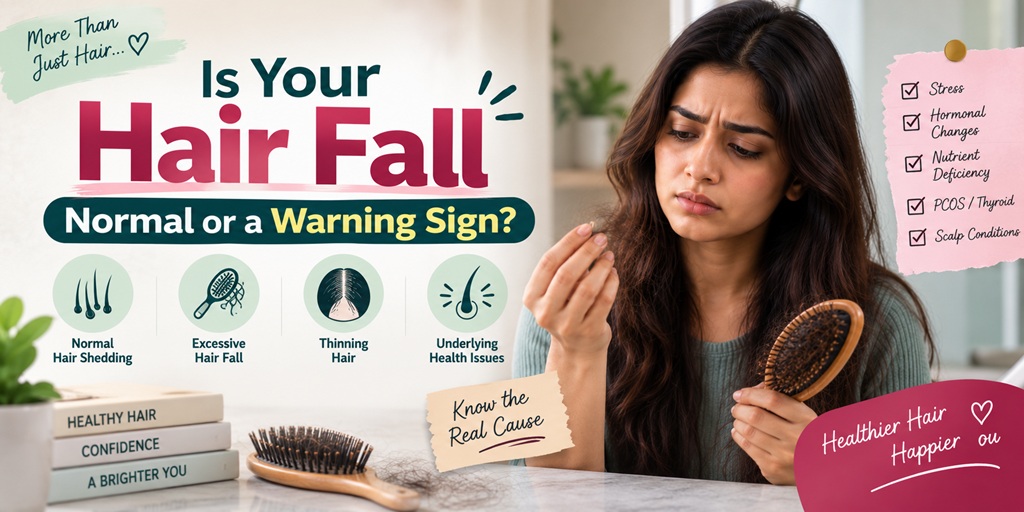
Losing 50 to 100 hairs a day is considered normal according to the American Academy of Dermatology, and this level of shedding usually isn’t noticeable since it’s a small fraction of the roughly 100,000 hairs on your scalp. It becomes a warning sign when you notice a widening parting, visible scalp, patchy bald spots, or clumps coming out rather than single strands.
How Many Hairs a Day Is Actually Normal to Lose?
Losing between 50 and 100 hairs daily is within the normal range according to the American Academy of Dermatology, since hair naturally cycles through growth and shedding phases, and roughly 10% of your hair is in its resting, about-to-shed phase at any given time. This number can vary somewhat based on hair length and thickness, people with thicker or longer hair sometimes shed a bit more simply because there’s more of it to notice. The key point is that this level of shedding replaces itself, new hair grows in as old hair sheds, so it doesn’t lead to visible thinning over time.
What’s the Simplest Way to Check If You’re Shedding Too Much?
A basic self-check is to gently pull a small section of hair, about 20 to 30 strands, from different parts of your scalp, if more than 3 to 5 hairs come out easily in one pull, that can suggest excessive shedding rather than normal hair loss. This isn’t a diagnostic test, but it’s a genuinely useful first indicator before assuming the worst or dismissing a real change.
What Are the Actual Warning Signs to Watch For?
Certain patterns point toward something beyond normal shedding, specifically a widening parting line, increasing visibility of your scalp, a receding hairline, or patchy bald spots appearing over weeks. Here’s how to tell the difference practically.
|
Sign |
Normal Shedding |
Warning Sign |
|
Amount per day |
Roughly 50 to 100 hairs |
Noticeably more, especially in clumps |
|
How it appears |
Spread evenly, not concentrated in one area |
Widening part, receding hairline, or patchy spots |
|
Scalp visibility |
No change over time |
Increasingly visible scalp in one area |
|
Onset |
Gradual, consistent |
Sudden increase, often tied to an illness, stress, or hormonal event |
|
Hair root appearance |
Small white bulb at the root (normal telogen hair) |
Hair breaking mid-strand rather than shedding from the root |
Why Did My Hair Fall Suddenly Increase Out of Nowhere?
A sudden, noticeable increase in shedding a few months after a stressful event, illness, high fever, crash diet, or childbirth is usually telogen effluvium, a temporary shedding phase where more hairs than normal enter the resting phase at once, and it typically resolves once the trigger passes. This surprises a lot of people because the shedding often starts two to three months after the actual trigger, so the connection isn’t always obvious at first. If you had a fever or major stress event around three months before your hair fall started, that timing itself is a useful clue.
When Should You Actually See a Doctor About Hair Fall?
- If your self-check pull test consistently shows more than 3 to 5 hairs coming out per pull
- If you notice a widening part, receding hairline, or visible scalp that’s changed over weeks or months
- If hair fall started suddenly and coincides with a recent illness, major stress, or hormonal change
- If you notice patchy, well-defined bald spots rather than diffuse thinning
- If hair fall is accompanied by other symptoms, fatigue, weight change, or irregular periods, which can point to an underlying condition like thyroid dysfunction or PCOD
Frequently Asked Questions
How many hairs is it normal to lose in a day?
Losing between 50 and 100 hairs a day is considered normal according to the American Academy of Dermatology, since this represents a small fraction of the total hairs on the scalp and is naturally replaced. Some sources cite a slightly wider range up to 150 depending on hair thickness and length.
How can I tell if I’m losing more hair than normal?
A simple pull test, gently pulling a small section of about 20 to 30 hairs, can help, if more than 3 to 5 hairs come out easily, that suggests excessive shedding. Beyond that, a widening parting, visible scalp, or patchy bald spots are clearer visual signs worth paying attention to.
Why is my hair falling out in clumps instead of single strands?
Hair falling out in clumps rather than gradually can point to a more significant shedding phase, such as telogen effluvium triggered by illness, stress, or a hormonal change, rather than routine daily shedding. This pattern is generally worth mentioning to a doctor rather than waiting it out.
Can stress really cause sudden hair loss months later?
Yes, a stressful event, illness, or major hormonal change can trigger a shedding phase called telogen effluvium that often doesn’t show up until two to three months afterward, which is why the connection isn’t always obvious. If your hair fall started a few months after a specific stressful period, that timing is a useful clue.
Is thinning hair always a sign of genetic baldness?
No, thinning hair can also result from temporary causes like telogen effluvium, nutritional deficiency, thyroid dysfunction, or hormonal conditions like PCOD, not just genetic pattern hair loss. Genetic hair loss typically follows a specific pattern, receding at the hairline or thinning at the crown, rather than diffuse shedding all over.
When is hair fall serious enough to need a doctor’s evaluation?
Hair fall is worth evaluating when it’s sudden, comes with visible scalp or patchy bald spots, or is accompanied by other symptoms like fatigue or irregular periods that might point to an underlying condition. Waiting several months without any change, or if the pattern is worsening, is also a reasonable point to seek evaluation.
If You’re Not Sure Which Category You’re In
If you’ve been noticing more hair than usual and aren’t sure whether it’s within the normal range or worth getting checked, the pull test and the signs above are a reasonable starting point before deciding. You can reach out on WhatsApp at +91 7009285462 or call 0181 5127753 to talk through your case, and you can read more about the hair fall treatment approach at the clinic.